
Selecting a surface material is rarely just about the initial wow factor. Whether you are specifying for a high-traffic hospital ward in Gauteng, a luxury coastal hotel in Durban, or a high-density residential development in Cape Town, the durability and hygiene of your surfaces can make or break the project’s long-term success.
The market is saturated with options, making it difficult to cut through the noise. Understanding the technical nuances between different types of countertops is essential for any specifier who values both aesthetics and structural integrity.
Navigating the Different Countertops: A Technical Comparison
When we look at the landscape of modern work surfaces, three primary contenders dominate the B2B sector: Natural Stone (and Quartz), Compact Worktops and Acrylic Solid Surface.
1. Natural Stone and Quartz
Historically, granite and marble were the gold standard. While they offer undeniable prestige, they present significant challenges in commercial environments. Natural stone is porous; without meticulous and regular sealing, it becomes a breeding ground for bacteria and is susceptible to permanent staining. Quartz, while less porous, often struggles with UV stability in South African interiors where large windows expose surfaces to high-intensity sunlight, leading to resin discolouration over time.
2. Compact Worktops
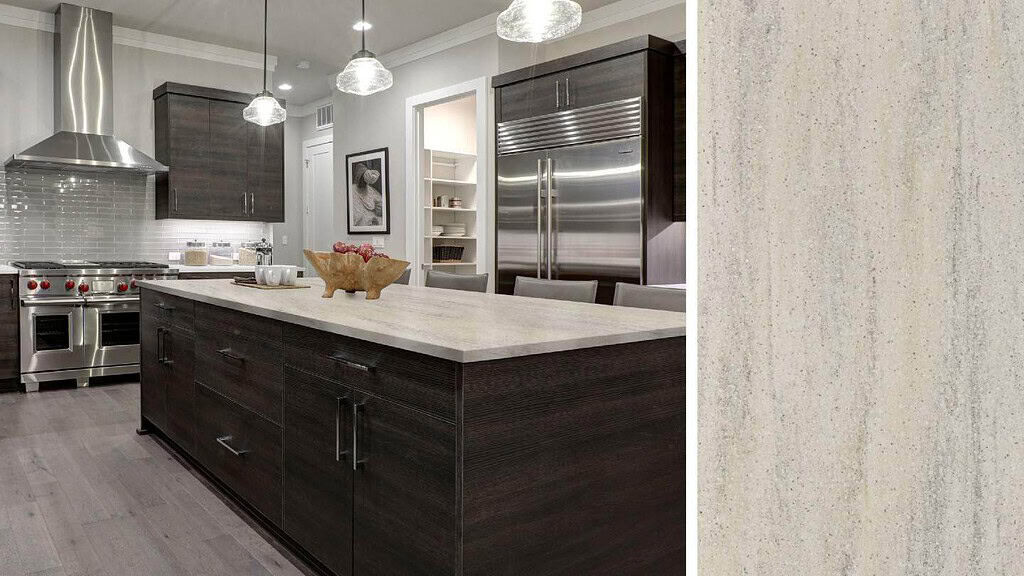
Interior Compact Worktops represent the pinnacle of self-supporting, high-density surfaces. Unlike traditional thin laminates bonded to a core, Fundermax Interior Compact is a solid, homogenous panel typically 12mm thick. It is incredibly robust, impact-resistant, and entirely waterproof. Because the core is solid, it can be machined to feature decorative bevelled edges and undermount sinks, making it an ideal choice for high-traffic office kitchenettes, canteens, and laboratories where moisture and heavy use are constant factors.
3. Acrylic Solid Surface
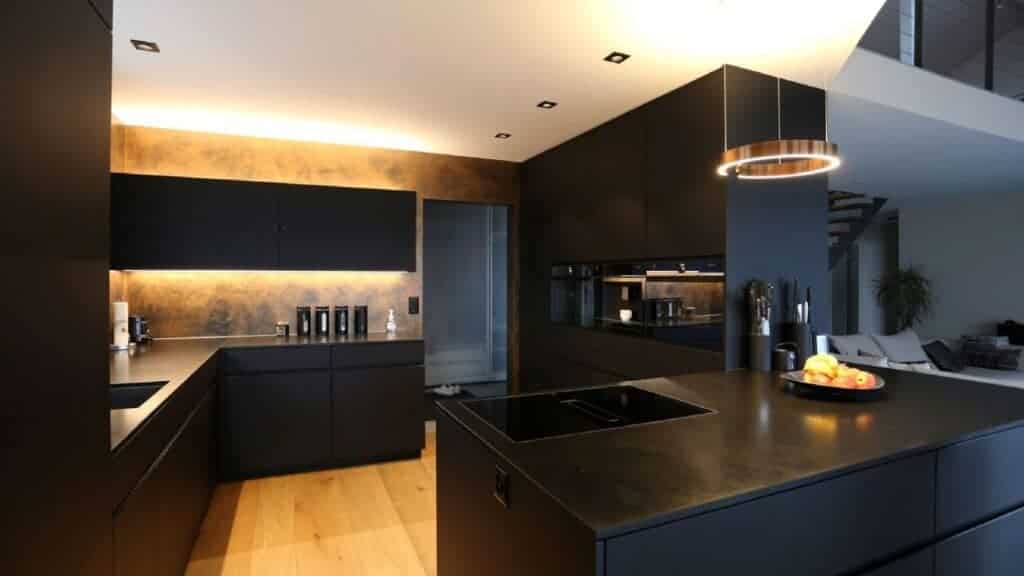
This is where the industry has seen the most significant shift. Acrylic Solid Surface offers a non-porous, homogeneous material that can be thermoformed into almost any shape. Unlike stone, it allows for inconspicuous joins, creating a single, seamless surface that is exceptionally easy to sanitise.
The Value Proposition: Why Specification Choice Impacts ROI
For a procurement manager or developer, the most affordable option on day one is often the most expensive by year five. When evaluating countertop types, one must consider the total cost of ownership.
- Hygiene and Maintenance: In South Africa’s healthcare and hospitality sectors, the ability to maintain a sterile environment is paramount. Solid surfaces do not require sealing and are resistant to mould, mildew, and most harsh chemicals. This reduces the need for expensive specialised cleaning protocols.
- Repairability: If a granite slab cracks or a laminate surface is deeply gouged, replacement is often the only remedy. Conversely, Acrylic Solid Surface is uniquely renewable. Scratches can be buffed out, and even significant damage can be repaired on-site by a specialist, restoring the surface to its original state without a full replacement.
- Longevity in the SA Climate: Our environmental conditions demand materials that don’t warp or fade. The high-performance types of countertops curated by Salvocorp are tested for thermal stability and lightfastness, ensuring the installation remains a long-term asset rather than a maintenance liability.
Strategic Selection for the B2B Market
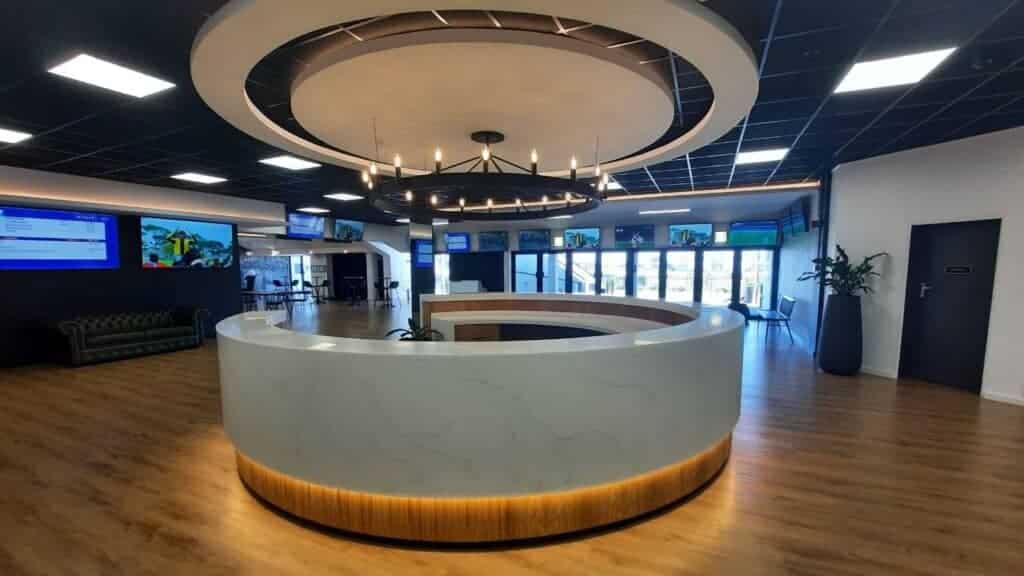
Choosing between different types of countertops requires a balance of intent and environment. If your project is a high-volume washroom partitioning solution, the technical requirements of the Greenlam Sturdo range provide a balance of anti-bacterial properties and mechanical strength. If the focus is on a bespoke reception desk or a laboratory benchtop, the seamless nature of Solid Surface is the clear winner.
The common pain point for many South African contractors is lead time and technical support. At Salvocorp, we supply the material and provide the technical expertise to ensure the specification is fit for purpose. From understanding the expansion coefficients of various materials to ensuring the substructure is correctly engineered, our role is to mitigate the risk for the specifier.
Commit to Quality with Salvocorp
The difference between a successful installation and a failed one often comes down to the quality of the raw material and the precision of the specification. By understanding the functional differences between different countertops, you can provide your clients with a space that is as durable as it is beautiful.
We invite architects and developers to move beyond generic specifications. Invest in surfaces that offer proven performance in the demanding South African market.
Looking for the right surface for your next development? Book a Consultation with a Salvocorp Specialist to discuss your project requirements, view our full range of samples, and receive detailed technical specifications for your tender documents.